Black-Sand Beach Couples Photoshoot: Reynisfjara, Vík and Diamond Beach
Black sand is why most couples put Iceland's South Coast on the list — and why many come home with photos that look nothing like the ones they imagined. The sand is never the problem; the sea, the wind and a car park that fills by ten are. Here are the three beaches our photographers actually shoot with couples — Reynisfjara, the town beach at Vík and Diamond Beach — what each gives you, and the rules that keep the session safe.
Why black sand flatters skin and colour
- No bounce. White sand throws light up into faces: squinting, hard light under the chin. Black sand absorbs it, so all the light comes from the sky in one soft direction, and skin keeps its warmth.
- Colour separation. In a photo the sand reads as deep charcoal, not pure black, and whatever you wear sits on it like paint on slate: rust, mustard, emerald, cream, white. Even a black coat works.
- Wet sand mirrors. Right after a wave retreats, the film of water reflects the sky and gives you a full-length reflection — the shot everyone asks for.
- Grey days work. Overcast at Reynisfjara is one enormous softbox: no shadows, no squinting, deeper colour. Do not cancel for cloud.
The three beaches compared
Reynisfjara — basalt columns and the Reynisdrangar stacks
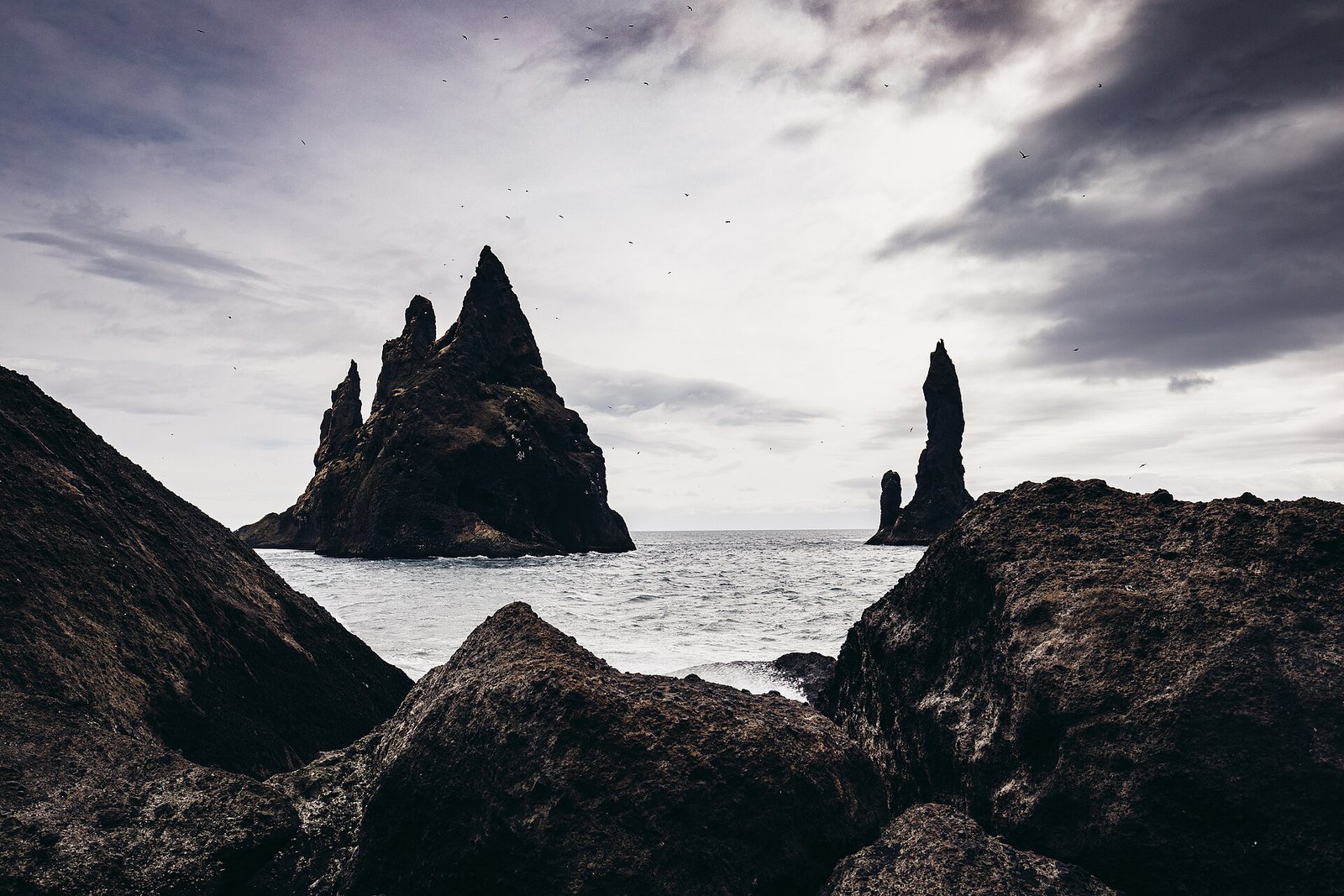
The famous one, fifteen minutes west of Vík around the mountain: the Garðar basalt columns stacked like an organ, the Hálsanefshellir cave and the Reynisdrangar sea stacks offshore. Dramatic, high-contrast, cinematic — and busy from ten to five. Parking and access: Reynisfjara location page.
Sneaker-wave rules — not optional:
- Never turn your back on the ocean. Your photographer watches the sea while you look at the camera; that is part of the job.
- Stay on dry sand. Wet sand means a wave reached that spot minutes ago and will again. The next one can run thirty metres further up the beach than the previous ten.
- Watch the danger-light system at the beach entrance. Green: normal caution, stay well back. Yellow: keep to the upper beach. Red: do not go down to the shoreline at all — we shoot from the top by the columns or move to Vík. People have died here, and every one of them was doing something that looked reasonable at the time.
- No feet-in-the-water shots and no "run towards the wave" shots.
Vík — the quieter town beach with the church view
Víkurfjara sits on the other side of Reynisfjall: the same stacks from a different angle, no columns, a fraction of the people. The red-roofed church stands on the hill above town, so a session in Vík naturally splits in two — on the sand with the stacks behind you, then up at the church with the whole bay below. Sneaker waves happen here too and the same rules apply, but the beach is long and there is room to stay back.
Diamond Beach — ice on sand
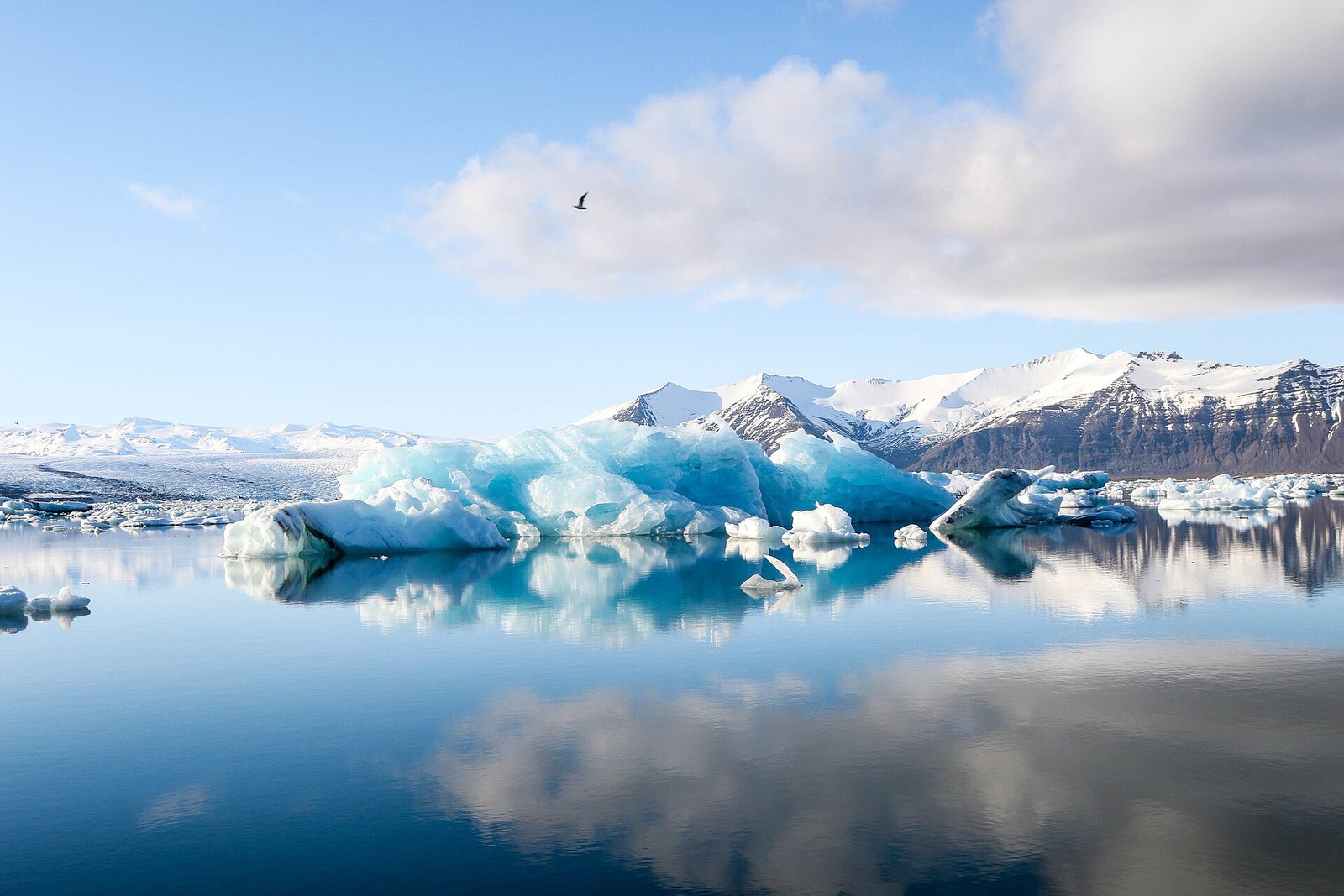
Two and a half hours further east, beside Jökulsárlón. Icebergs from the glacier lagoon drift out through the channel and wash back onto the black sand. Blue and glass-clear ice on charcoal — Diamond Beach is at its best after a storm or a day of strong onshore wind, when the beach fills; after calm days it can be nearly empty. Winter brings more and bigger pieces, summer smaller and clearer ones melting fast. Never climb on an iceberg (they roll), never stand between a big block and the surf, and the wave rules are identical.
| Beach | Signature | Crowds | From Vík | Best for |
|---|---|---|---|---|
| Reynisfjara | Columns, cave, stacks | Heavy 10:00–17:00 | 15 min | Drama, engagement |
| Vík beach | Stacks and the church | Light | 5 min | Calm, elopements |
| Diamond Beach | Ice on sand | Moderate | 2 h 30 | Winter, honeymoon |
Light by hour
- Summer (June–July). Sun sets near midnight, rises around three. Golden light 21:00–23:30 and again 3:30–6:00. Midday is hard top light with no fill from the sand; we book 21:00 or 5:00.
- Shoulder (April–May, August–September). Sunrise around six, sunset around nine or ten: real golden hours at human times, fewer people, cheaper rooms.
- Winter (November–January). The sun barely clears the horizon — up around eleven, down about half past three. The whole day is golden hour, just short; one session from 11:30 to 14:30 covers everything.
Wind, hair and dress choices
The South Coast is windy. Ten to fifteen metres per second is a normal day; above twenty we reschedule.
- Hair. Loose hair reads as motion and can be beautiful; it also covers a face in half the frames. Bring a tie and shoot half up, half down. Face the wind or take it on the side — never with your back to it.
- Dresses. Weight matters. Chiffon is gorgeous at five metres per second and a sail at twelve; heavier crepe, satin and wool hold their shape. A long coat over the dress is the Iceland look: camel, black or cream over colour.
- Underneath. Thermal base layers under everything — nobody smiles while shaking. Flat boots look right on black sand.
What clients say about this kind of shoot
I am a part of a choir in Iceland, and we played a part in a JCS (Jesus Christ Superstar) production at Harpa in Reykjavík, Iceland. I asked my friend Johann Smári to attend the dress rehearsal and feel free to take some photos. The outcome was amongst these 4 photos here on the site and many more outstanding shots, which we use on posters and ads for our choir. And on top of it, Jóhann Smári is a good man and nice to have around.
— Gísli F. on Johann K.
I have done a few photoshoots with Smári and always have had a great experience. He is a great photographer and has such a good eye for great locations for the kind of photoshoot I had in mind. I am always surprised at how good the photos come out. If you are looking for someone with great experience on the best places to take photos, have worked in many events and all around great at bringing art to life, through lenses, then Smári is your guy.
— Marly G. on Johann K.
We absolutely love the photos Johann Smári took of us! He is professional, friendly, and made us feel so comfortable. We're so happy with the beautiful memories he captured. Highly recommend him!
— Kara & Gummi on Johann K.
This was such a wonderful experience to book on our last day in Iceland. Lisa was not only incredibly professional and talented as a photographer, but just so friendly and knowledgeable about Iceland's geography, lore and local intel, sharing so many anecdotes that it also felt like a private tour with a friend. It had a great personal touch — it felt like we experienced quieter spots of Iceland, away from the tourists. I lost track of how many times I smiled and laughed, and it was a perfect way to end the trip. If I ever come back to Iceland I will be booking Lisa again. Thank you, Lisa, for making our last day in Iceland truly magical ☆
— Adam on Lisa N.
Lisa was an absolutely amazing host! I loved how she was able to tailor the experience to me and let me explore little-known areas around the Golden Circle. She was funny, kind, super informative and an overall great person; she felt like a friend from the moment we met. I'm super excited to see the photos!
— KaRissi on Lisa N.
Loved it x1000! Lisa is super sweet and personalises the experience based on what you like. This was a great start to my solo trip — can't wait to see the pictures! She captured all my good angles and helped guide me on what to do ✨ Thank you, Lisa, till next time!
— Aniya on Lisa N.
An overnight-in-Vík plan
Day 1. Drive from Reykjavík — two and a half hours straight, four to five with Seljalandsfoss and Skógafoss. Check in, then the evening session at Reynisfjara: 21:00–23:00 in summer, 13:30–15:30 in winter. Sleep in Vík.
Day 2. Early session on Vík beach and up at the church: 5:00–7:00 in summer, 10:30–12:00 in winter. Then drive east to Jökulsárlón (2 h 30) for Diamond Beach in afternoon light — or the next morning if you stay near Höfn.
One photographer can travel with you for both, or you book one in the south and one in the east — see the photographers page.
Winter ice vs summer green
In summer the Reynisfjall cliffs are green with grass and moss, puffins nest there from May to August, and the light never really ends. In winter the palette is black and white: snow on the cliffs, ice on the sand, the sun low all day, and on a clear night the aurora over the same beach. Diamond Beach peaks in winter; the green season suits Reynisfjara and Vík.
Poses that work on uneven ground
- Walk, don't stand. Hand in hand along the dry side of the tide line, photographer ahead. Uneven ground disappears in motion.
- Plant both feet. Lean into each other with feet apart. No one-legged poses, no tiptoe kisses on pebbles.
- Sit. Coat spread on the sand, facing each other, or one between the other's knees looking at the stacks.
- The columns. Second or third step, side by side, feet on the same level — only on a green light, with the photographer facing the sea.
- Forehead to forehead. The wind-proof pose.
Short timing table
| Month | Sunrise / sunset (Vík, approx.) | Best window | Notes |
|---|---|---|---|
| December–January | 11:00 / 15:30 | 11:30–14:30 | Ice, snow, few people |
| March | 7:30 / 19:10 | 7:30–9:00, 18:00–19:30 | Long light, cold |
| June | 3:00 / 23:45 | 21:00–23:30, 4:00–6:00 | Green cliffs, puffins |
| September | 6:40 / 19:45 | 6:30–8:30, 18:30–20:00 | Aurora possible from mid-month |
Book a couples photoshoot with a photographer who knows these beaches — and who will spend the session with one eye on the sea.
Frequently asked questions
Is Reynisfjara safe for a couples photoshoot?
Yes, if you follow the rules that nobody here bends. Sneaker waves run far up the beach without warning, so you stay on dry sand, never turn your back on the ocean and never pose at the waterline. The light system at the entrance decides the day: on yellow you keep to the upper beach, on red the session moves to Vík or to the top by the columns. Your photographer watches the sea while you look at the camera.
What should we wear for photos on a black-sand beach?
Colours that sit on charcoal like paint on slate: rust, mustard, emerald, cream or white, and even a long camel or black coat over a dress. Choose heavier fabrics such as crepe, satin or wool, because chiffon becomes a sail at twelve metres per second. Wear thermal base layers underneath and flat boots with grip, and bring a hair tie so you can shoot half with hair down and half tied back.
What time of day is best for photos at Reynisfjara, Vík and Diamond Beach?
In summer book around 21:00 or 05:00, when the sun sits low and the car park is empty; midday brings hard top light with no fill from the dark sand. In winter the sun barely clears the horizon, so one session between about 11:30 and 14:30 covers everything in golden light. Overcast days work well, because the cloud acts as one big softbox. Diamond Beach is best in winter and after a storm has pushed fresh ice onto the sand.
Want professional photos in Vík?
Browse portfolios, compare packages, and book a verified local photographer in minutes.