A couples photoshoot in Iceland: planning one session that actually works
Pick one region, not three
The single most common planning mistake is treating a couples session like a sightseeing route. Iceland is bigger than it looks on a map, the roads are two lanes, and the good light is short outside midsummer. Seljalandsfoss is about two hours from Reykjavík, Vík about two and a half, Jökulsárlón about five. Adding a second region does not double the photographs; it halves the time at each place and puts you at the best location in the worst light.
One region per session. Within it, two or three viewpoints at most, chosen so the light moves in your favour rather than against it. A photographer who works the area weekly will set the order — which waterfall is in shadow at three, which beach has the wind behind it — and that ordering is a large part of what you are paying for. The couples session page shows what a standard ninety minutes covers.
Real shots from Seljalandsfoss
The triad: waterfall, black sand, ice
Almost every memorable couples series shot in Iceland leans on one of three backgrounds, and they behave differently.
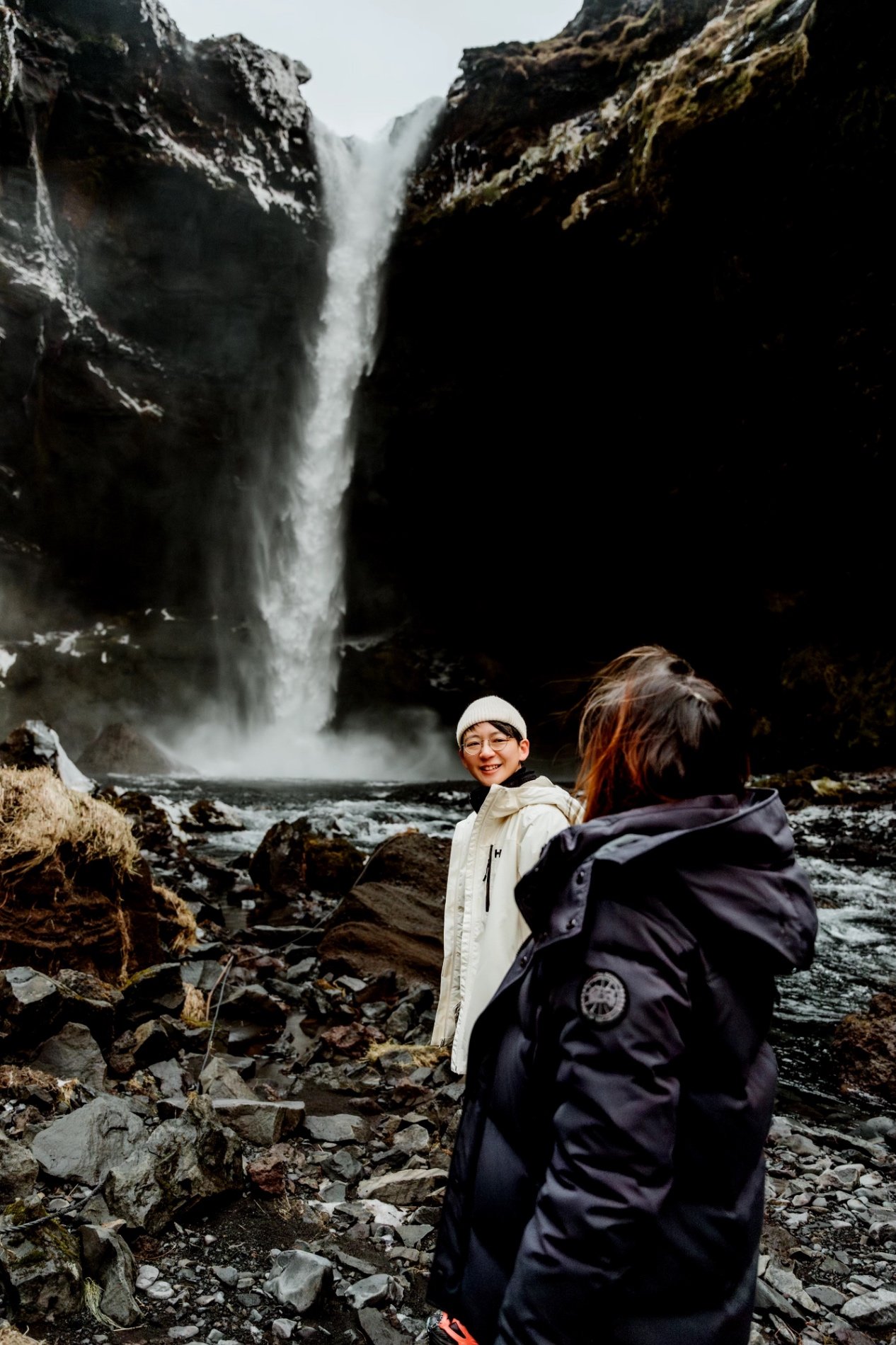
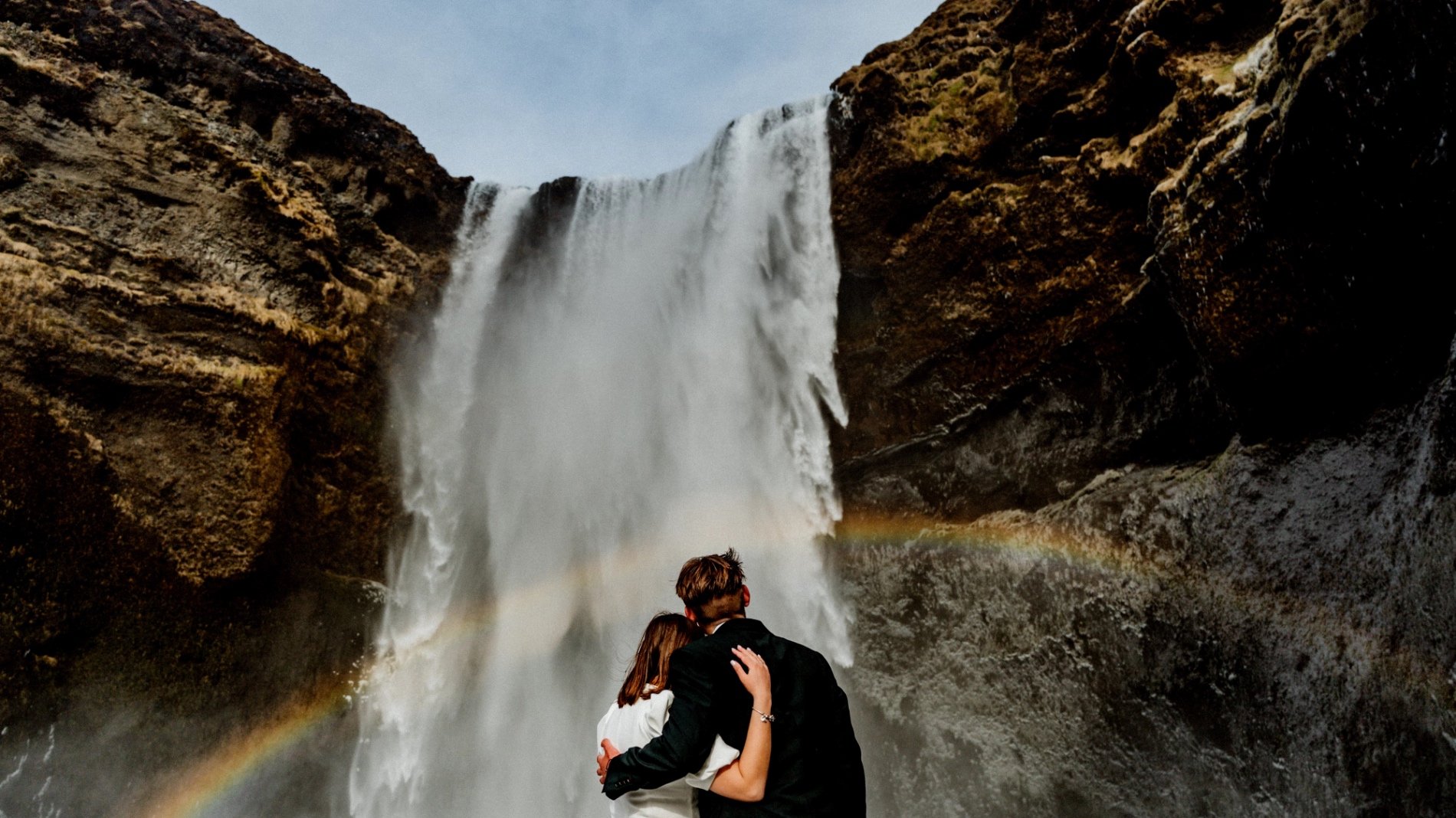
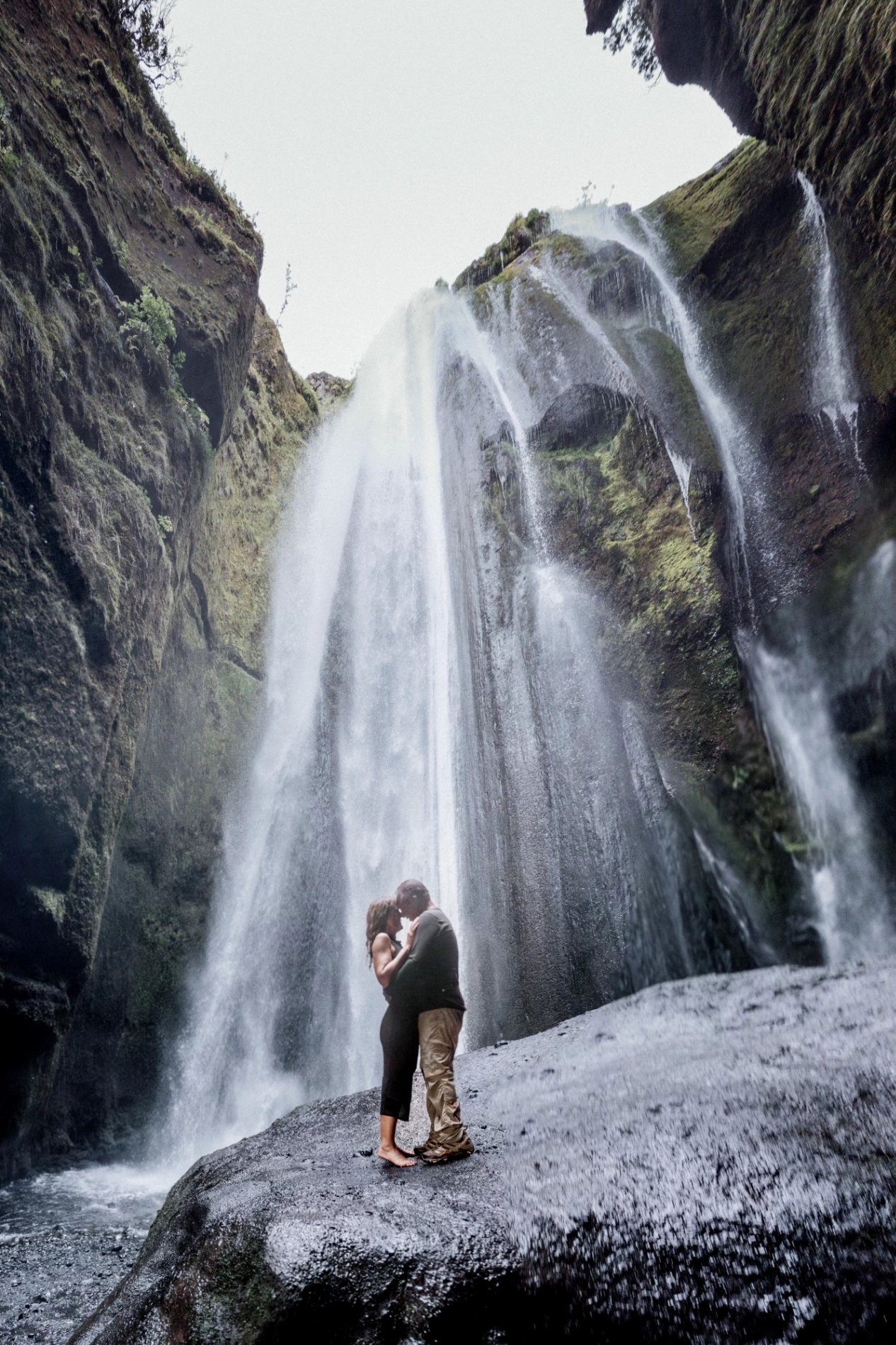
Water. A waterfall gives you scale and movement, and it is the frame people picture when they imagine Iceland. Seljalandsfoss is the one you can walk behind, which produces a photograph no other place offers — two people inside the cave path, the water falling in front of them. It faces west and sits in shadow until the afternoon, so it is a late-day location. Skógafoss, half an hour further, is flat in front and throws a rainbow when the sun is behind you. Both will soak you a little; that is the deal.
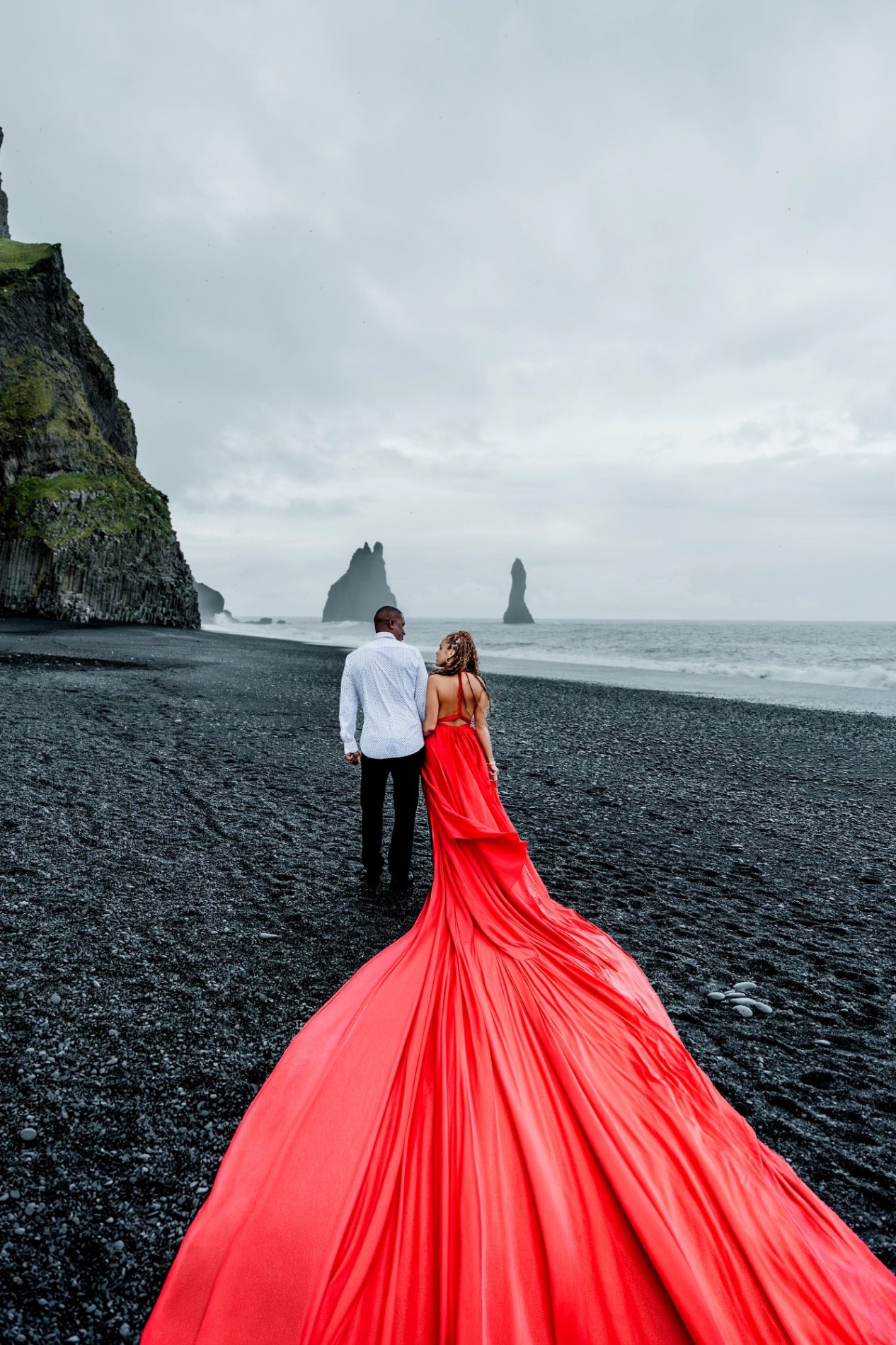
Black sand. The dark ground does something no studio backdrop does: it drops out completely and makes skin, hair and pale fabric glow. Reynisfjara for couples is the classic — basalt columns, sea stacks, even morning light in the shade of the cliff. Read the wave rule before you go: sneaker waves run far up that beach without warning and nobody poses at the waterline, on any day. Vík's town beach gives a similar view with a fraction of the people.
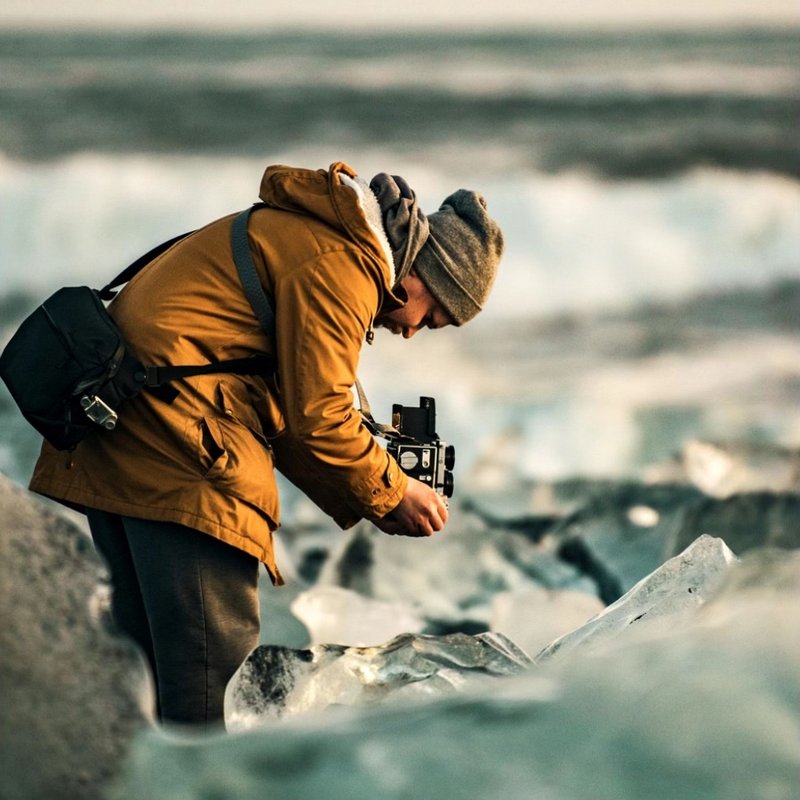
Ice. Jökulsárlón and Diamond Beach are the strangest and most specific frames in Iceland: blue icebergs behind you on the water, or clear ice on black grit at your feet. It is a five-hour drive each way, so it belongs to a trip that is already going east, ideally with a night nearby. Ice on the beach is at its best from October to March.
The two-background version is the sweet spot for a single session: a waterfall and a black beach on the south coast, in that order, ending at sunset. If you want the beach detail, the black sand beach couples guide compares the three of them hour by hour.
Wind, and what it does to hair
There will be wind. Not a breeze — a steady blow that has crossed the North Atlantic without meeting anything. Planning around it is the difference between a session you love and an hour of fighting your own clothes.
- Choose a hairstyle that works when moving. Loose and deliberate, or properly tied back. A style that is trying to stay in place will lose, and every frame will show it.
- Long skirts photograph beautifully in wind and terribly in gusts. A dress with weight and length reads as movement; a light one wraps around the legs. Have someone hold it between frames.
- Veils are a wind decision, not a style decision. Ask the photographer before you pack one.
- Face into the wind for the frames that matter. Hair off the face beats hair across it, and photographers position couples accordingly, which is why you may be asked to stand somewhere that feels backwards.
Hands, cold, and the coat swap
Cold is a technical problem with a technical solution. Cold hands are stiff, red and photograph badly, and cold people stop touching each other, which is the whole point of a couples session.
The system that works: warm base layers no one ever sees, hand-warmers in both pockets, and one good coat that comes off for two minutes at a time and goes straight back on. Do the close work first while everyone is warm, the wide shots afterwards when you are wrapped up — those look right in a coat anyway. Bring a flask. In winter, count on 60 to 90 minutes outdoors, not two hours, unless you are unusually tolerant.
Footwear is the other half of it. Wet basalt, loose black sand and lava rock all punish nice shoes, and a slip at a canyon rim is a serious matter rather than a funny one. Walk in boots and change for the frames where feet actually show.
What clients say about this kind of shoot
This was such a wonderful experience to book on our last day in Iceland. Lisa was not only incredibly professional and talented as a photographer, but just so friendly and knowledgeable about Iceland's geography, lore and local intel, sharing so many anecdotes that it also felt like a private tour with a friend. It had a great personal touch — it felt like we experienced quieter spots of Iceland, away from the tourists. I lost track of how many times I smiled and laughed, and it was a perfect way to end the trip. If I ever come back to Iceland I will be booking Lisa again. Thank you, Lisa, for making our last day in Iceland truly magical ☆
— Adam on Lisa N.
Lisa was an absolutely amazing host! I loved how she was able to tailor the experience to me and let me explore little-known areas around the Golden Circle. She was funny, kind, super informative and an overall great person; she felt like a friend from the moment we met. I'm super excited to see the photos!
— KaRissi on Lisa N.
Loved it x1000! Lisa is super sweet and personalises the experience based on what you like. This was a great start to my solo trip — can't wait to see the pictures! She captured all my good angles and helped guide me on what to do ✨ Thank you, Lisa, till next time!
— Aniya on Lisa N.
I had a brilliant day with Lisa and her dog. She showed me wonderful places where there were few tourists, or none at all. She's really lovely and we had a great time together. I can recommend her to anyone! :)
— Laura on Lisa N.
Lisa is super awesome and drives us to secret spots that no tour would ever take us to! She also helps with posing and tells amazing stories about Iceland! I'm excited to see how the photos turn out!
— Nghi on Lisa N.
Had a blast. It was such a wonderful way to see Iceland and to capture the moment. A personal tour with a wonderful photographer — it was just like hanging out with friends for the day.
— Catherine Marie on Lisa N.
How long, and when
Session length. Sixty minutes is enough for one city walk or one straightforward spot. Ninety minutes to two hours is the standard for an out-of-town location and is what most couples book. Half a day, three to five hours, buys you two or three stops along the south coast finishing at sunset. Beyond that you are into full days, which make sense for the east or for a couple who want the whole story of a trip.
Season. Late May to July gives the midnight sun, with warm light from roughly 22:00 to 01:00 and locations empty at the hour you want them. September and October bring back a normal sunset, add autumn colour and the first aurora nights. December has four to five hours of daylight, all of it low and gold, plus snow and the best chance of having a famous place to yourselves. February to April combines snow with lengthening days.
The rescheduling habit. Book early in your trip. Weather rescheduling is free, and the spare day is what makes that promise usable. Agree a plan B location during the planning call, not on the morning.
If you are getting engaged on the same trip, the sequencing is worth thinking about — engagement photos in Iceland covers how that session differs and why many couples run both.
Finding the right photographer
Look for galleries that show the weather you are actually likely to get. Anyone can make a blue-sky day at Kirkjufell look good; the photographers worth booking have a portfolio full of grey, wind and rain that still looks like a good day out. Read the package rather than the total — edited photo counts, delivery time and whether a second location is included vary more between profiles than the prices do. Browse the photographers by region and message two or three; the planning conversation tells you as much as the portfolio.
Frequently asked questions
How long should a couples photoshoot in Iceland be?
Ninety minutes to two hours at one location is the standard and suits most couples: enough time to relax, cover the wide frames and the close ones, and move between two viewpoints. An hour works for a city session or a single easy spot. In winter, plan for 60 to 90 minutes outdoors rather than two hours, because cold hands and faces show in the photographs long before anyone complains.
What is the best season for couples photos in Iceland?
There is no bad season, only trade-offs. Summer gives the midnight sun and hours of golden light after 22:00, with empty locations at that hour. Autumn gives normal sunset times, colour and the first northern lights. Winter gives four to five hours of continuous low gold, snow and the chance of a famous waterfall to yourselves, at the cost of fitting only one location into the day.
Which locations work best for a couples session?
Build the session around one region. On the south coast, a waterfall and a black beach in the same afternoon is the strongest combination — Seljalandsfoss or Skógafoss, then Reynisfjara or the quieter beach at Vík at sunset. Þingvellir is the closest real landscape to Reykjavík and the most sheltered. Jökulsárlón and Diamond Beach are the most unusual, but they need a full day or a night nearby to be worth the drive.
blogDetail.blogCta.titleLocation
Browse portfolios, compare packages, and book a verified local photographer in minutes.