Vestrahorn & Stokksnes photoshoot guide: tides, wind and the black mirror
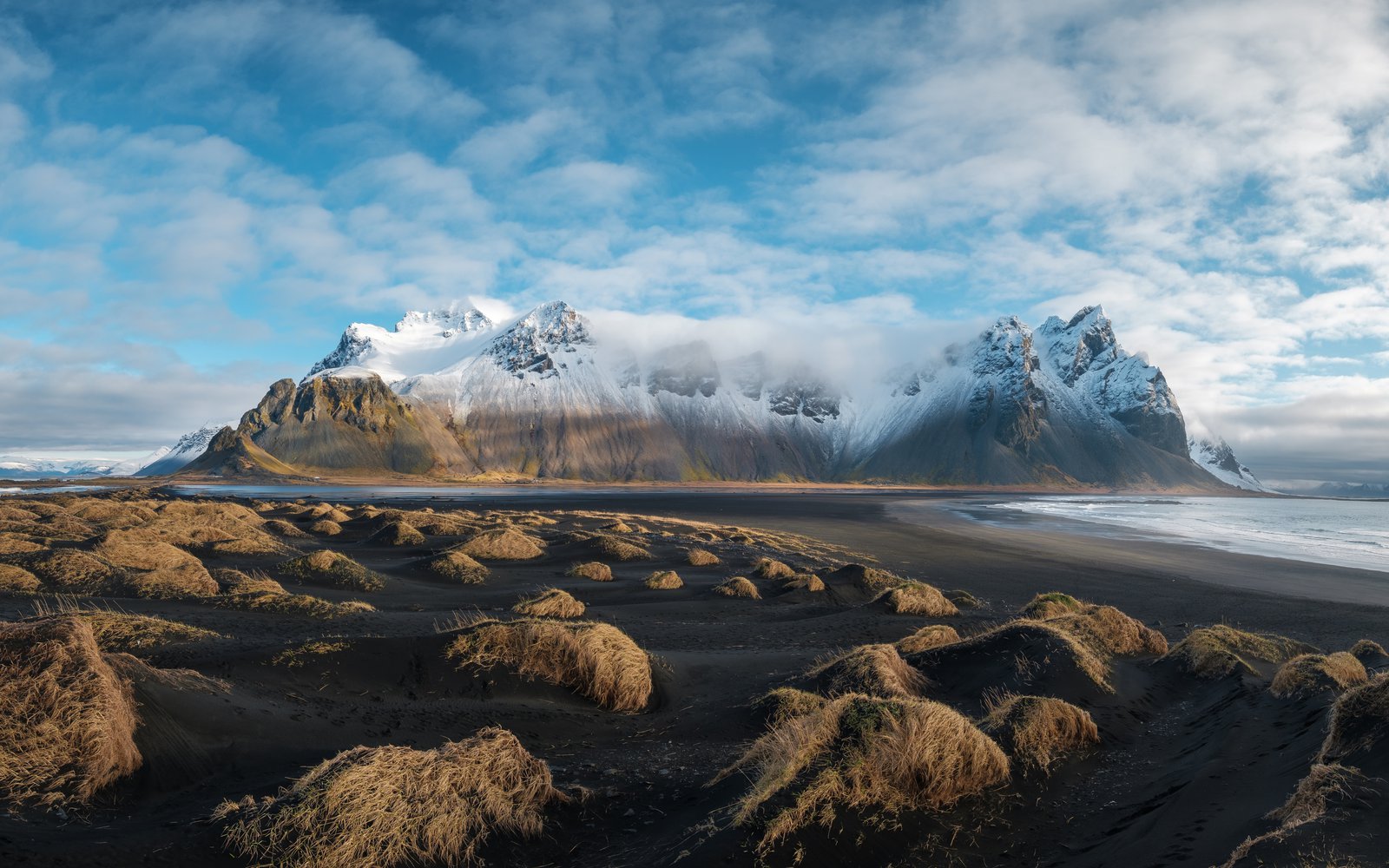
Vestrahorn is the black, saw-toothed mountain at Stokksnes near Höfn, and the reason photographers drive half the ring road for it is the tidal flat below: for about an hour either side of low water it turns to a mirror and the mountain doubles at your feet. A session here is planned around two things — the tide table and the wind — and the dunes, the film set and the aurora all follow from getting those two right.
Where it is, and the gate you pass through
Vestrahorn rises 454 metres straight out of the sea, a gabbro massif with no foothills to soften it, about fifteen minutes east of Höfn at the end of a short gravel track off Route 1. The whole headland — beach, dunes, film set — is private land belonging to the farm at Stokksnes, and access runs through the Viking Café at the gate: a small entry fee per person and opening hours that shift with the season. Check both before you fix a date. The café is also the nearest coffee, toilet and shelter, which matters more here than it sounds.
The drive is the honest part of the planning. Höfn is roughly six hours from Reykjavík and about an hour east of Jökulsárlón, so nobody shoots Vestrahorn and Stokksnes as a day trip from the capital. Clients who book here are already staying in or near Höfn, which is why sunrise and evening slots fill first.
The tide decides whether you get the mirror
The famous frame — mountain, sky and two people reflected in a sheet of water an inch deep — exists only around low tide, when the sea pulls back off the flat black sand and leaves a film behind. Pull the tide table for your date, aim for the window that runs roughly an hour either side of low water, and build the session around it rather than around the clock.
Miss it and you are not stranded. The dunes behind the beach are tussocked, wind-carved and wonderful in their own right, and they photograph well at any state of the tide. A good photographer will start in the dunes while the water goes out and move down to the flat as it opens up, which is also the sequence that keeps everybody warm longest.
Light: face at sunrise, silhouette at sunset
The mountain faces roughly south-east, and that single fact organises the whole day. At sunrise the low sun lands on the face and picks out every ridge and gully. At sunset it comes from behind and turns the whole massif into a black cut-out over the mirror, which is the more dramatic of the two and the easier to pose against.
In winter the entire short day behaves like golden hour, so a midday booking in January is not the compromise it would be anywhere else. And from September to April this is one of the darkest, most open aurora foregrounds in the country — no towns, no headlights, a flat horizon and a mountain worth silhouetting. If northern lights are the point of your trip, read our honest guide to aurora photoshoots before you build a schedule around them; the lights are never a booking guarantee.
What a two-hour session covers
Two hours here is genuinely varied, because everything is within a few minutes of the car:
- The dunes. Black sand, pale tussock grass, the mountain behind. The most forgiving light of the whole site and the best place to warm up in front of a camera.
- The tidal flat. The reflection frames, shot low and wide. Bring boots you don't mind soaking.
- The Viking film set. A set of turf-and-timber houses left standing on the sand from an abandoned production, a few minutes further along the same track — an optional second scene with a completely different mood.
- The long lens frames. Two small figures against 454 metres of black rock. Worth five minutes of walking apart.
That range is why the site suits couples sessions at Vestrahorn and elopements as well as it suits landscape work, and why a proposal at Vestrahorn is easier to keep secret than one in a busy Golden Circle car park: a photographer can stand a long way off and still fill the frame.
Wind, black sand, and what both do to a plan
Vestrahorn is exposed on three sides and the wind is the deciding variable more often than rain is. Two consequences worth planning for.
First, the sand. It is volcanic, heavy and abrasive, and in a strong gust it lifts hard enough to sting bare skin and to get inside a camera. Photographers here change lenses in the car, not on the beach, and a session may move up into the shelter of the dunes rather than fight it out on the flat.
Second, clothes and hair. Veils, long skirts and loose hair are either the best thing in your gallery or the reason half the frames are unusable, and which one it is depends on planning: hair tied or deliberately loose with the wind at your back, pins in a pocket, a second layer for the walking shots. Our guide to what to wear for a photoshoot in Iceland covers the layering that survives this. Boots matter too — the walking here is soft sand and low dunes rather than paths, so nothing with a heel and nothing canvas.
Making a day, or two, of the east
Vestrahorn is rarely the whole trip. Höfn, fifteen minutes away, is the warm-up and the langoustine dinner. An hour west, Jökulsárlón and Diamond Beach make the classic golden-hour double bill described in our South Coast photo guide. North, about two and a half hours through the fjords, Stuðlagil turns the basalt columns blue-green from roughly June to September — a very different picture in the same region and an easy second session on a two-night stay.
If you are already planning an engagement shoot around a ring-road trip, the eastern leg is the one people skip and then wish they hadn't.
Book it
Every photographer sets the price of each of their packages, and every price shown is all-inclusive — nothing is added at checkout. Browse the photographers, compare their packages on duration, region and photo count, and book the one that fits; your edited gallery usually arrives within about a week. The Stokksnes entry fee is paid at the gate and is not part of the session price.
Tell your photographer that Vestrahorn is the goal when you book, so the slot can be built around low water rather than around a convenient hour. Browse the photographers covering east Iceland and put the tide in the first message.
Frequently asked questions
Do I have to pay to get onto Stokksnes beach?
Yes. The headland is private farmland and access runs through the Viking Café at the gate, which charges a small entry fee per person and keeps its own seasonal opening hours. Pay there, park there, and check the current hours before you fix a session time, since they change through the year. The fee is separate from your photoshoot price and is not collected by us.
When is the tide right for the Vestrahorn reflection?
The mirror appears when the sea has pulled back off the flat sand, roughly the hour either side of low water. Look up a tide table for Höfn for your date and give your photographer that window before agreeing a start time. If low water falls at an impossible hour, the tussock dunes behind the beach photograph beautifully at any tide, so the session still works.
Can we see the northern lights at Vestrahorn?
Between September and April, yes — this is one of the darkest and most open aurora foregrounds in Iceland, with no town glow and a horizon worth silhouetting. Nothing is guaranteed, though: you need a clear sky and active conditions on the night. Treat an aurora frame as a bonus on top of a session that already works, and keep the date flexible if the lights are the main goal.
How far is Vestrahorn from Reykjavík?
About six hours by car each way, so it is not a day trip. Almost everyone who shoots here is staying in or around Höfn, fifteen minutes from the gate, on a ring-road itinerary. Jökulsárlón is an hour west, which makes a two-night stay in the area enough for a lagoon session and a Vestrahorn session without rushing either of them.
Want professional photos at Vestrahorn?
Browse portfolios, compare packages, and book a verified local photographer in minutes.