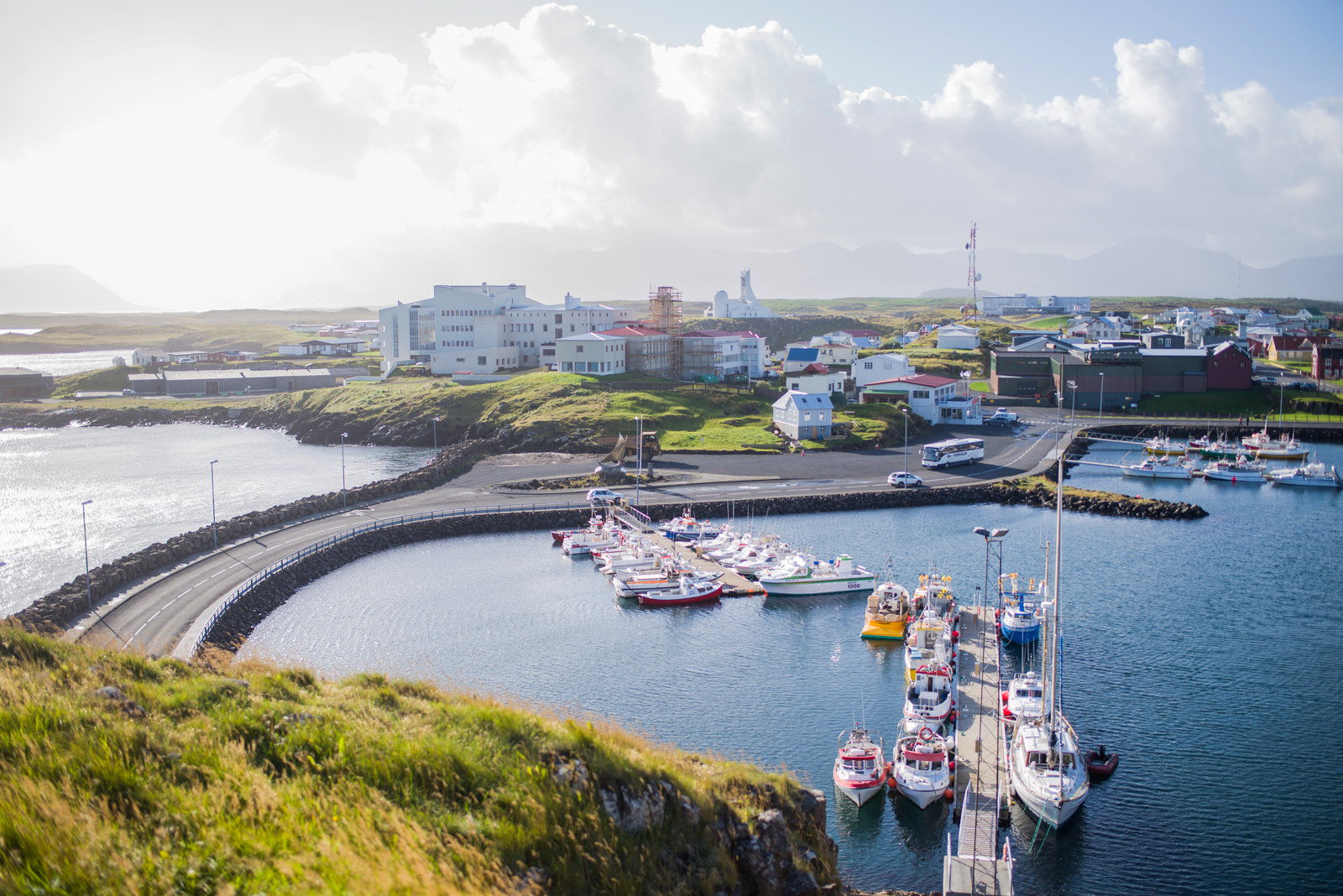
Photo spot in Stykkishólmur
Berserkjahraun lava field
Four thousand years of moss-covered lava under red cinder cones, twenty minutes west of town — the wildest scene on Snæfellsnes that you can drive into.
About Berserkjahraun lava field
Get directionsBerserkjahraun is the lava field between Stykkishólmur and Grundarfjörður, poured out of four red cinder craters roughly four thousand years ago and now buried under a thick, spongy layer of grey-green moss. Its name comes from the Eyrbyggja saga: two Swedish berserkers were set to clear a path through the lava as an impossible bride price, and did it — the old path is still traceable across the field.
Road 558, an unpaved loop off Route 54, cuts straight through it and is the whole access story: a couple of pull-outs, a rough track, and lava on both sides. Park and you are in the scene within twenty paces, which makes it a rare thing in Iceland — a wilderness backdrop with no hike attached.
Shoot it two ways. Wide, with the couple tiny against the tumbled moss and a red crater rising behind, the road hidden by a rise. Or close, letting the moss texture and the black rock edges fill the frame around a tight portrait. The colour is at its most saturated after rain and in September, when autumn turns the moss ochre at the tips.
One firm rule: do not walk on the moss. It grows a centimetre a decade, a footprint stays visible for years, and damaging it is both an offence and the thing every Icelandic photographer will judge you for. Stay on the track, on bare rock or on the gravel of the road edge — there is plenty of both, and the pictures do not need more.
Best time to shoot
Late afternoon and evening for low side-light on the moss; strongest colour after rain and in September
Tips
Frame wide with a red crater behind and the road hidden by a rise, then go close for moss texture. Never step on the moss — it grows a centimetre a decade and footprints stay for years.
Recent work in Stykkishólmur
Portfolio shots by photographers covering this area
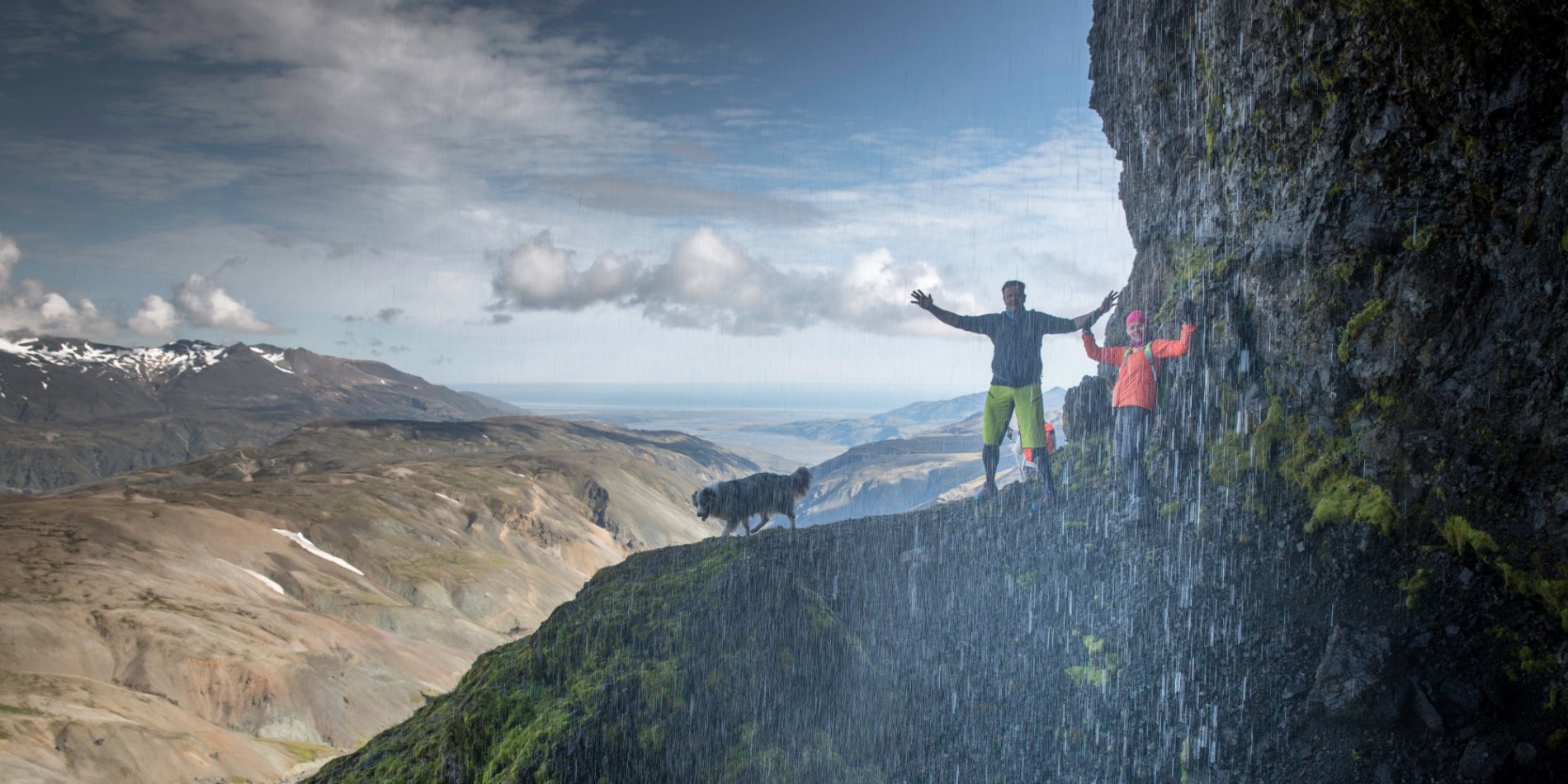
Real reviews from Stykkishólmur photoshoots
Marly G.
I have done a few photoshoots with Smári and always have had a great experience. He is a great photographer and has such a good eye for great locations for the kind of photoshoot I had in mind. I am always surprised at how good the photos…
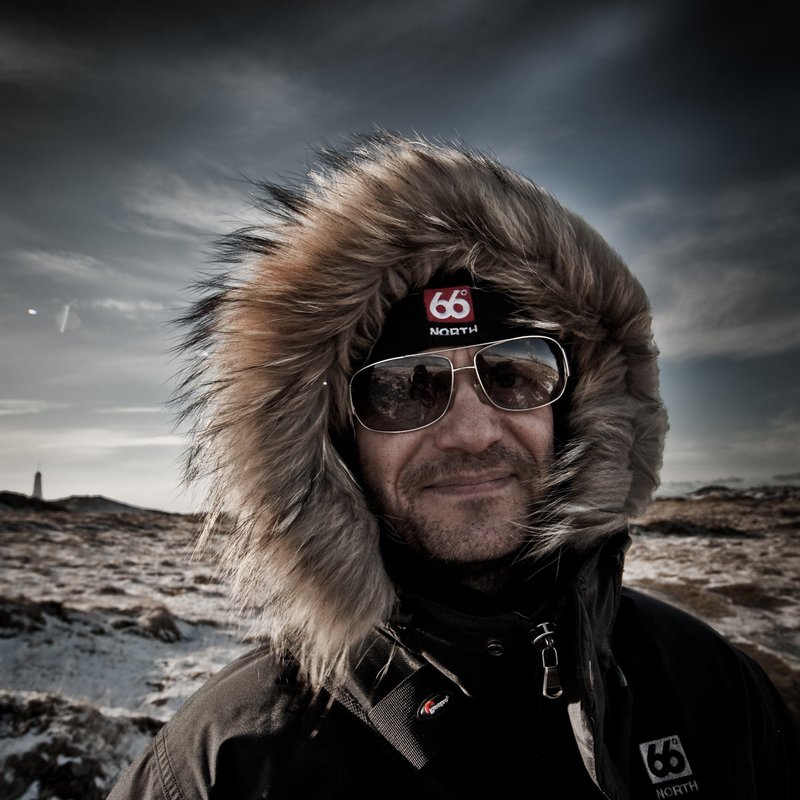
Johann K.
Photographer
Gísli F.
I am a part of a choir in Iceland, and we played a part in a JCS (Jesus Christ Superstar) production at Harpa in Reykjavík, Iceland. I asked my friend Johann Smári to attend the dress rehearsal and feel free to take some photos. The…
Johann K.
Photographer
Other spots in Stykkishólmur
Súgandisey lighthouse over the harbour
A squat red lighthouse on a basalt island, reached by a causeway and a flight of steps — the whole harbour and the islands of Breiðafjörður spread below.
The painted timber houses on Hafnargata
A run of nineteenth-century wooden houses in mustard, red and black above the quay — including Norska húsið, built from Norwegian timber in 1832.
Stykkishólmskirkja on the hill
A white concrete church that curves up from the slope like a whale's jaw — pure shape outside, pure light inside, and the whole town below it.
Ready to book?
Our concierge team will hand-pick 2-3 photographers who know Berserkjahraun lava field — free of charge.