South Coast photo guide: Seljalandsfoss, Skógafoss, Vík, Reynisfjara, Jökulsárlón
The South Coast is the stretch of Route 1 between Reykjavik and Jökulsárlón, and no road in Iceland packs more into one day: two big waterfalls, a black-sand beach with basalt columns, a village under sea stacks, a national park and a lagoon full of icebergs. Here it is as a photo itinerary — drive times, the light at each stop, where the buses are, the safety rules, and how a photographer joins for one stop or the whole day.
Real shots from South Coast
The stops at a glance
| Stop | From Reykjavik | Drive | Best light |
|---|---|---|---|
| Seljalandsfoss | 120 km | ~2 h | late afternoon to sunset (faces west) |
| Skógafoss | 155 km | ~2 h 15 | late morning to early afternoon (rainbow) |
| Reynisfjara | 180 km | ~2 h 30 | early morning or evening; winter sunsets over the sea |
| Vík | 185 km | ~2 h 30 | evening at the church, sunrise on the town beach |
| Skaftafell | 325 km | ~4 h | midday for Svartifoss (shaded gorge) |
| Jökulsárlón / Diamond Beach | 380 km | ~5 h | sunrise, sunset and blue hour |
Times are for dry roads with no stops; on snow or in wind add 30–50 % and check road.is and vedur.is first. Parking is paid everywhere except in Vík itself (about ISK 750–1,000, card or app).
Stop by stop
Seljalandsfoss
A 60 m curtain with a path behind it, and it faces west: the cliff keeps it in shadow until early afternoon, so come late. In summer the sun sets behind the water and the view from inside is backlit gold; in winter the path is closed for ice and the front view in low light is the shot. Bring a shell — the spray reaches 50 m. Gljúfrabúi, 600 m north, hides in a slot canyon with soft light all day. See the Seljalandsfoss page.
Skógafoss
Sixty metres straight down, 25 m wide, and the spray throws a rainbow whenever the sun is behind you: late morning to early afternoon in summer, around noon in winter. The classic frame is a person tiny at the base; the second is from the top of the stairs, down the river to the coast. Before 09:00 and after 19:00 you share it with a dozen people, not five hundred.
Dyrhólaey and Reynisfjara
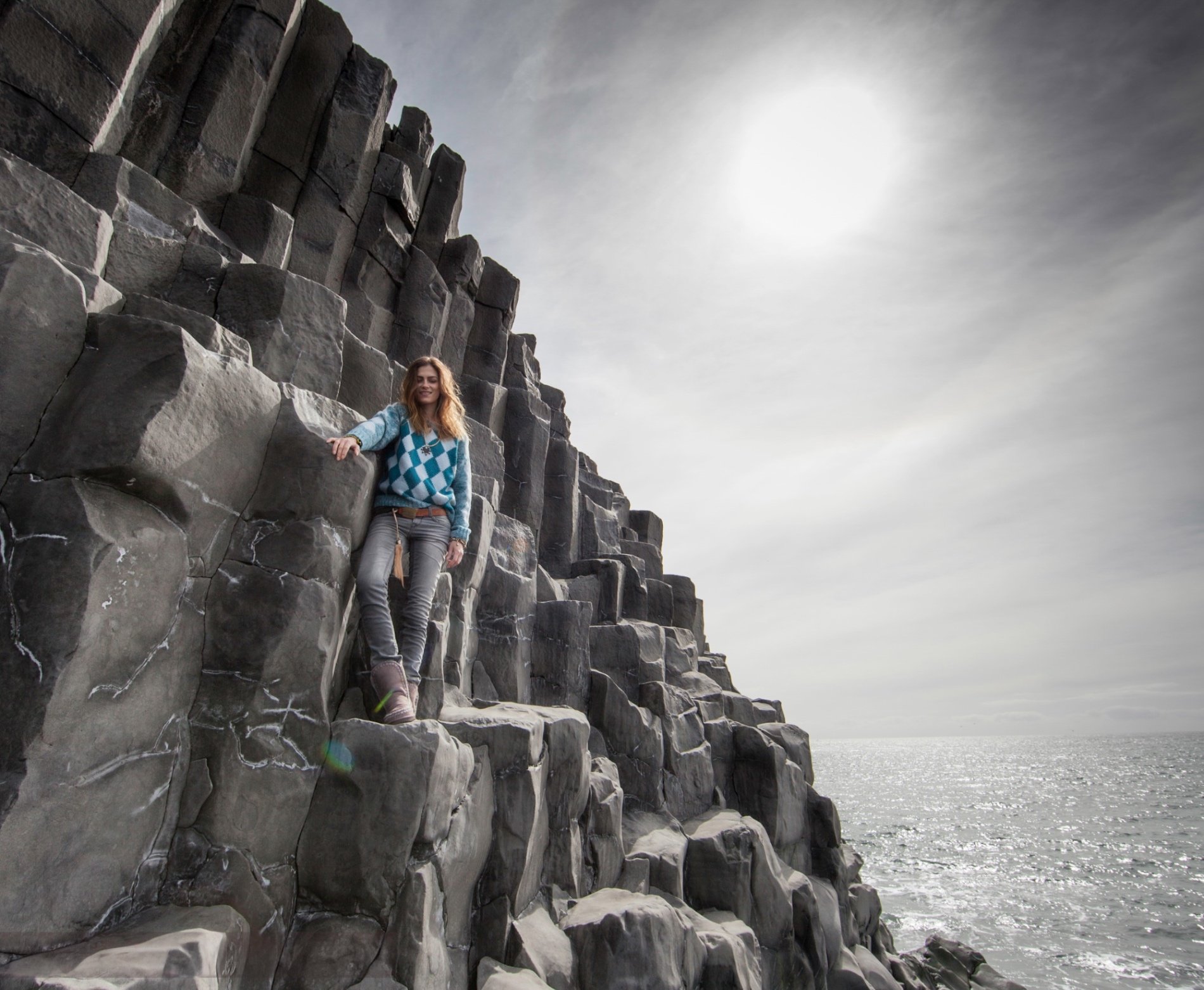
Dyrhólaey is the arch and the lighthouse, the best view down onto Reynisfjara, and puffins from May to mid-August. Reynisfjara is the beach: basalt columns, the Hálsanefshellir cave and the Reynisdrangar stacks offshore. The columns sit in shadow in the morning — even light for faces, and a beach almost to yourselves; afternoon sun lights the stone, and from October to February the sun sets into the sea. Buses arrive from about 10:30. Safety rules below.
Vík
Vík í Mýrdal is the base for everything east of Skógafoss. The church on the hill with the stacks behind is an evening picture; the town beach, Víkurfjara, gives you the Reynisdrangar at sunrise without the crowds, under the same wave rules.
Skaftafell
The gateway to Vatnajökull National Park. Svartifoss, the waterfall framed by black basalt columns, is a 1.5–2 h round trip with a climb, in a gorge that only gets sun around midday.
Jökulsárlón and Diamond Beach
The lagoon is where Breiðamerkurjökull calves: icebergs, seals, blue ice. Across the bridge the ice washes back onto black sand at Diamond Beach. Sunrise is the moment — light comes low across the water and the ice glows. Beach ice is biggest and clearest from October to March; in summer there is often little or none. See the Jökulsárlón page.
One day, or a night in Vík?
One day from Reykjavik (to Reynisfjara and back, 370 km, 10–12 h):
- 08:00 leave Reykjavik; 10:00 Seljalandsfoss and Gljúfrabúi, one hour
- 11:30 Skógafoss, one hour; 13:30 lunch in Vík
- 14:30 Reynisfjara, then Dyrhólaey, two hours
- 17:00 back west (in summer, Seljalandsfoss again at sunset); 20:00 Reykjavik
Jökulsárlón in a day means 760 km, ten hours at the wheel and the lagoon at flat midday. Don't.
Overnight in Vík (the plan that gets the good light):
- Day 1: Seljalandsfoss, Skógafoss, Reynisfjara in evening light, sleep in Vík.
- Day 2: sunrise at Reynisfjara or the church, no buses; Fjaðrárgljúfur canyon; Skaftafell; Jökulsárlón and Diamond Beach at sunset; sleep near the lagoon or drive the five hours back.
- A second night adds a sunrise at the lagoon. From November to March this is the only realistic way to reach it.
Reynisfjara: the rules that keep you alive
- Sneaker waves run far up the beach without warning, in weather that looks calm. People have drowned here, standing where you might think to pose.
- The car park has a traffic-light sign: green is caution, yellow means stay well back, red means stay off the sand. Obey it.
- Never turn your back on the sea and keep at least 30 m from the waterline. Nobody poses at the water's edge — not for any shot, not on a green day.
- Stay out of the cave on yellow or red. On red, the session moves: Dyrhólaey from above, the church in Vík, Skógafoss.
- Diamond Beach has the same waves plus ice: don't climb it at the waterline, and never step onto a floating berg — they roll.
What clients say about this kind of shoot
I am a part of a choir in Iceland, and we played a part in a JCS (Jesus Christ Superstar) production at Harpa in Reykjavík, Iceland. I asked my friend Johann Smári to attend the dress rehearsal and feel free to take some photos. The outcome was amongst these 4 photos here on the site and many more outstanding shots, which we use on posters and ads for our choir. And on top of it, Jóhann Smári is a good man and nice to have around.
— Gísli F. on Johann K.
I have done a few photoshoots with Smári and always have had a great experience. He is a great photographer and has such a good eye for great locations for the kind of photoshoot I had in mind. I am always surprised at how good the photos come out. If you are looking for someone with great experience on the best places to take photos, have worked in many events and all around great at bringing art to life, through lenses, then Smári is your guy.
— Marly G. on Johann K.
We absolutely love the photos Johann Smári took of us! He is professional, friendly, and made us feel so comfortable. We're so happy with the beautiful memories he captured. Highly recommend him!
— Kara & Gummi on Johann K.
Season by season
- June–August: midnight sun, golden light roughly 22:00–01:00 and 03:00–05:00, full waterfalls, lupins in June, puffins at Dyrhólaey. Little ice at Diamond Beach; buses 10:00–17:00.
- September–October: golden hour at a civilised 19:00, the first northern lights, far fewer buses, rougher weather.
- November–March: four to seven hours of light — in December sunrise is around 11:00, sunset by 15:30 — all of it low and gold. Diamond Beach at its best, ice caves from the lagoon, aurora over the stacks. Microspikes for every path; storms shut Route 1 some days — keep a spare day.
- April–May: the falls at full melt, snow on the peaks, long days, few people. Fjaðrárgljúfur is sometimes closed in spring to let the paths recover.
How a photographer fits in
Most photographers on Photo Iceland are based in Reykjavik; a few live in Hvolsvöllur, Vík or Höfn. Three ways to book:
- One or two stops, 1–2 hours. Meet at Seljalandsfoss and Skógafoss (30 km apart) or at Reynisfjara and Vík. The drive from the capital — 2–2.5 h each way — is part of the price, so one stop rarely costs less than two.
- A half day, 3–5 hours. Late afternoon at Seljalandsfoss, Skógafoss, then Reynisfjara at sunset.
- A full day, 8–10 hours. The photographer drives with you or separately; the plan flexes with the weather. For Jökulsárlón, book someone in the south-east or expect an overnight in the quote.
Agree a meeting point and a plan B, then let the photographer set the order: they know which beach is in shadow at what hour. Browse photographers by region and see what packages cost in our pricing guide.
Drones and permits
- Jökulsárlón, Diamond Beach and Skaftafell are inside Vatnajökull National Park: no drone without a permit from the park, and rangers check.
- Reynisfjara and Dyrhólaey are signed no-drone areas; Dyrhólaey is a nature reserve with nesting birds from May to August.
- Elsewhere EASA rules apply: register a camera drone, stay under 120 m, never over people; read the sign at each car park.
- Weddings and larger productions at the lagoon need a park permit, applied for weeks ahead; a couple's session with a handheld camera does not. Your photographer should know the current rules.
Frequently asked questions
Can you do a South Coast photoshoot in one day from Reykjavik?
To Reynisfjara and back, yes: about 370 kilometres and ten to twelve hours with stops at Seljalandsfoss, Skógafoss and Vík. Jökulsárlón in a day means 760 kilometres and the lagoon at flat midday, so give it a night in Vík instead. A photographer can join for one or two stops in a one- or two-hour session, for a half day ending at Reynisfjara at sunset, or for the whole day driving with you.
What is the best time of day for photos at Seljalandsfoss, Skógafoss and Reynisfjara?
Seljalandsfoss faces west and sits in shadow until early afternoon, so come late in the day for the backlit view from behind the water. Skógafoss throws a rainbow when the sun is behind you, late morning to early afternoon. At Reynisfjara the columns are shaded and quiet in the morning, and from October to February the sun sets into the sea. Buses fill every car park from about 10:00 to 17:00; in winter the four to five hours of light are all golden.
Do I need a permit for a photoshoot at Jökulsárlón or Reynisfjara?
A couple's session with a handheld camera does not, but weddings and larger productions inside Vatnajökull National Park, which includes Jökulsárlón, Diamond Beach and Skaftafell, need a park permit applied for weeks ahead. Drones need a permit in the park and are banned at Reynisfjara and Dyrhólaey, where birds nest from May to August. Rules change, so check the sign at each car park and ask your photographer, who follows them every season.
Want professional photos on the South Coast?
Browse portfolios, compare packages, and book a verified local photographer in minutes.