Látrabjarg & Rauðasandur photographers, ready to book
Westfjords
Engagement Photographer in Látrabjarg & Rauðasandur
An engagement shoot out here trades comfort for emptiness — gravel roads, a rusting steel hull on the grass at Skápadalur, red sand that changes colour with the tide, and no queue anywhere.
Engagement Photographer at Látrabjarg
An engagement shoot out here trades comfort for emptiness — gravel roads, a rusting steel hull on the grass at Skápadalur, red sand that changes colour with the tide, and no queue anywhere.
About Látrabjarg & Rauðasandur
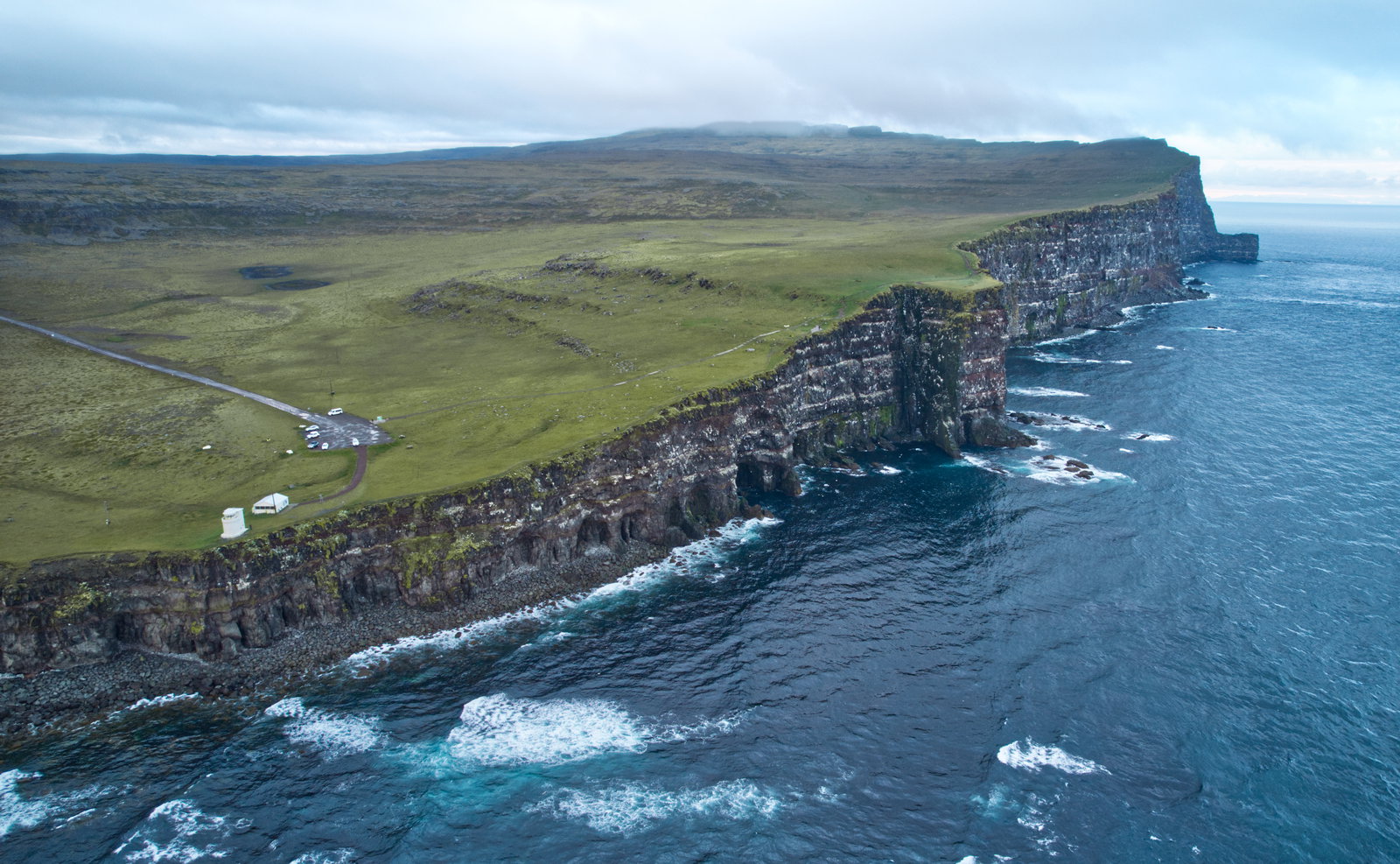
This is the far end of the Westfjords and, at Bjargtangar, the westernmost point of Europe: a wall of rock running fourteen kilometres along the sea and rising to 440 metres, packed in summer with puffins, razorbills and guillemots. From roughly late April to early August the puffins nest on the grassy lip of the cliff and are famously unbothered by people, which is why photographers lie flat on the turf a couple of metres from a bird and come away with frames that look impossible. Round the headland, Rauðasandur breaks every rule of Icelandic coastline: ten kilometres of sand that runs pink, gold and deep red depending on the light and the tide, with a shallow lagoon behind it and the black timber church at Saurbær standing alone against the slope. Between the two, on the shore at Skápadalur, the rusted hull of Garðar BA 64 — Iceland's oldest steel ship, beached in 1981 — sits upright on the grass, and Patreksfjörður, the district's small harbour town, supplies the beds, fuel and coffee. Getting here is the price of admission. The last stretch of Road 612 to Látrabjarg is gravel, narrow, and slow in any car; the descent to Rauðasandur on Road 614 is a steep single-track with blind bends. Both are summer roads: they close or turn unpleasant outside roughly June to September, and there is no fuel past Patreksfjörður — check road conditions before you set out and fill up first. On the cliff, keep well back from the edge: it is undercut turf with nothing underneath, and it has killed people. Everything about the day rewards a slow plan, and almost nobody else is up here.
The whole region
💑Engagement Photographer in the WestfjordsOther photoshoots at Látrabjarg
Four Steps to Stunning Photos
From booking to delivery — we make professional photography effortless
Choose Your Path
Browse photographer profiles yourself and pick your favorite — or tell us your preferences and let our team hand-pick the perfect match for you.
Self-service or concierge — your choice
Book Instantly
Pick your date, choose a package, and book your session in minutes. Chat with your photographer to plan the details.
Secure payment with Apple Pay & Google Pay
Enjoy Your Shoot
Meet your photographer at the perfect location. Relax, be yourself, and let them capture your best moments.
Average session: 1-2 hours
Get Your Photos
Receive professionally edited photos in a private, password-protected gallery. View online, download individually, or grab the full ZIP.
Secure gallery with password protection
Your Money is Protected
Powered byWhen you book a session, your payment is securely held by Stripe — not charged to the photographer. The money is only released after you receive your edited photos and confirm you're happy with them. If something goes wrong, you can open a dispute and get a full refund. Zero risk.
Top Photo Spots at Látrabjarg
The most photogenic locations for your Látrabjarg & Rauðasandur photoshoot
Bjargtangar and the cliff edge
The westernmost point of Europe — 440 metres of bird cliff falling into the Atlantic, with puffins on the turf a few steps away from May to early August.
Best time: Late evening in summer, when the sun rakes along the west-facing cliff and the birds are most active
Lie flat several metres back from the edge and use a longer lens for the puffins rather than closing the distance. For portraits, put people on the grass slope and let the receding cliff line carry the scale.
The Garðar BA 64 wreck
Iceland's oldest steel ship, beached upright on the grass at Skápadalur in 1981 and rusting quietly ever since — a whole set piece three steps from the road.
Best time: Overcast light saturates the rust; low evening sun from the west rims the plating
Shoot the bow head-on for scale, then move to the seaward side for rivets and rust behind a tight portrait. Never climb on or enter the hull — thin plating, unsound deck, sharp edges.
Patreksfjörður harbour
The district's small harbour town — trawlers at the quay, painted houses climbing the slope, and a fjord that goes mirror-still on a windless evening.
Best time: Calm summer evenings for the fjord reflection; winter days stay dim under the mountain wall
Use the working-boat texture at the quay for close frames, then drive the fjord road east for the wide view of the town under the mountains. Stay clear of crews landing fish.
Rauðasandur's red sand
Ten kilometres of sand that runs pink, gold and deep red with the light, a shallow lagoon behind it and a black timber church alone on the slope.
Best time: Low tide for the wet-sand mirror; late afternoon and evening for the warmest reds
Check the tide table first — low water gives a mirror of wet sand, a filling tide gives the lagoon. Photograph Saurbær church from the road or track; it stands on private farmland.
Frequently asked questions
When is the best season for an engagement shoot in Iceland?
There's no wrong one, only different films. June-July is the midnight sun: endless golden evenings, lupine fields, shoots that can start at 10pm. September-April brings the northern lights, frost on the moss and far fewer people at the famous spots. Winter shoots are shorter and colder but the low sun is a photographer's dream all day long. May and September are the sweet spots for mild weather plus soft light. If your wedding date sets your deadline for save-the-dates, count 2-3 weeks after the shoot for your edited gallery.
What should we wear for engagement photos in Iceland?
Think texture and movement: knitwear, wool coats, scarves that catch the wind, a long dress that flows. Iceland's palette is black sand, green moss and grey sky, so cream, rust, burgundy and mustard stand out beautifully; all-black outfits vanish against the basalt. Sturdy boots are non-negotiable — you'll walk on wet rock and gravel — and thermal layers hide easily under everything. Many couples bring two outfits: one dressed-up for the hero shots, one cosy for the walking-and-laughing frames. Your photographer will happily review your choices beforehand.
Can we do several locations in one engagement session?
Yes, and in Iceland it's often the right call — the south coast strings Seljalandsfoss, Skógafoss, Vík and Reynisfjara along one road like beads. A half-day session covers two or three of them with unhurried shooting at each; a full-day trip can reach the glacier lagoon. Within Reykjavik, three or four spots fit easily into two hours on foot. The one thing your photographer will protect you from is over-planning: two locations shot well beat five shot from the parking lot.
How much does a photoshoot at Látrabjarg and Rauðasandur cost?
Each photographer sets their own price for a photoshoot here: every package on their profile shows an all-inclusive price, and nothing is added at checkout. Packages vary by duration and the number of edited images, and distance shapes the choice more than usual: an hour covers one place well, while two hours can link the cliff top with the wreck of Garðar BA 64 or the red sand at Rauðasandur. Roads between them are gravel and slow, so agree the driving time with your photographer when you book rather than on the day.
What are the best photo spots at Látrabjarg and Rauðasandur?
The cliff edge at Bjargtangar, Europe's westernmost point, where the turf drops 440 metres and puffins nest on the lip from roughly late April to early August. Rauðasandur's ten kilometres of pink-to-red sand, with the black timber church at Saurbær alone on the slope behind. The rusted hull of Garðar BA 64 upright on the grass at Skápadalur. And Patreksfjörður's harbour, where the boats and painted houses give a sheltered plan B.
What is the best time of day and season to photograph Látrabjarg?
The cliff faces west into the Atlantic, so late evening is its hour — in June and July the sun barely sets and the light stays warm past midnight, which is also when the puffins are most active and the car park empties. Season decides the rest: roughly late April to early August for the birds, and June to September for comfortable roads. Rauðasandur changes colour with the tide, so time it for low water.
Engagement Photographer in nearby destinations
Also consider these locations near Látrabjarg & Rauðasandur.
Engagement Photographer in Westfjords
The corner of Iceland most visitors skip — mirror fjords under seven-hundred-metre walls, Europe's western edge and puffins within arm's reach.
View photographers →Engagement Photographer in Ísafjörður
The capital of the Westfjords on a sandspit between fjord walls — old timber houses, still water and the remotest big landscape in Iceland.
View photographers →
Ready to book your engagement photographer at Látrabjarg?
Browse verified photographers and book in minutes — no commitment, money-back guarantee.